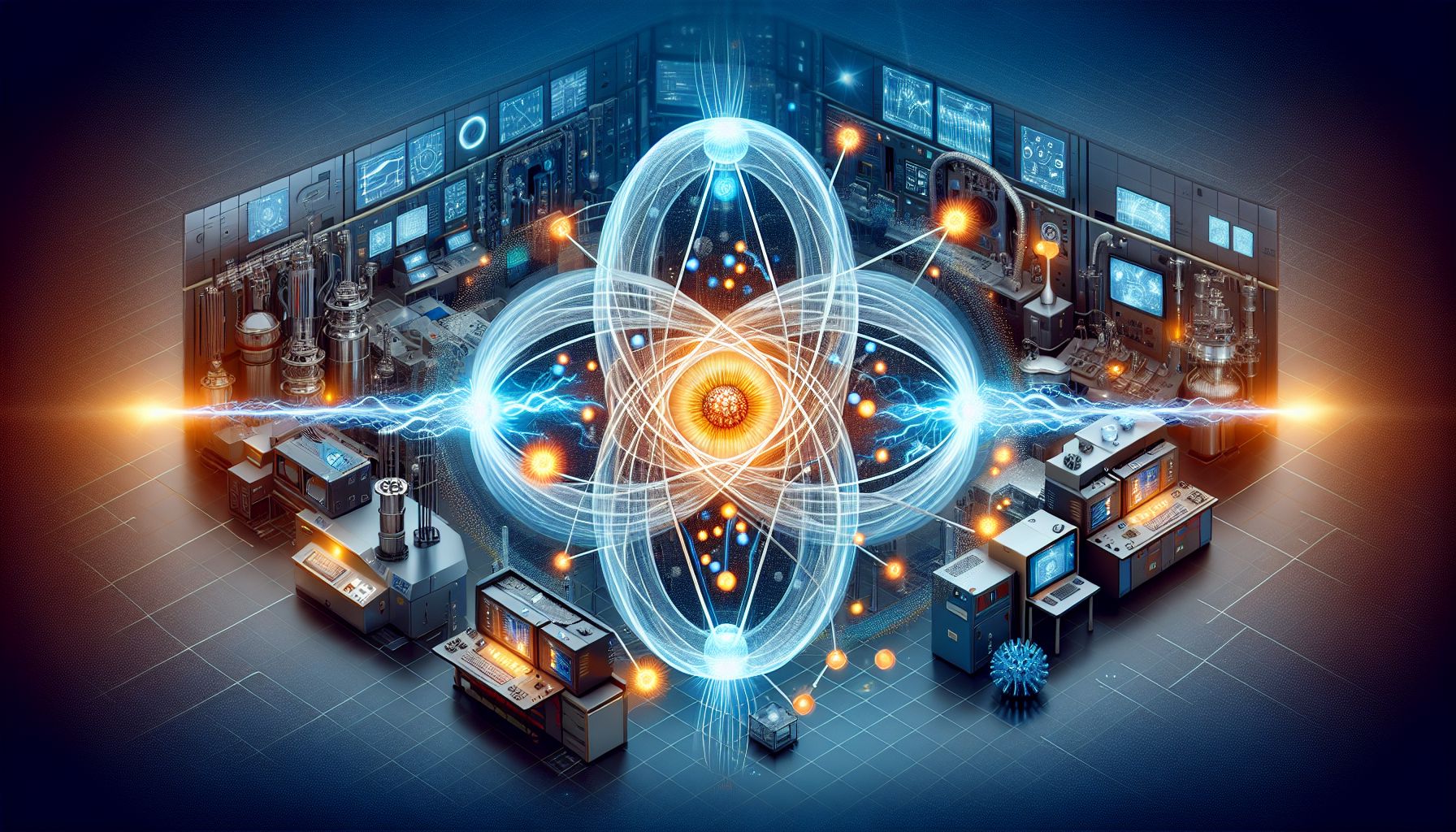
Hey tech explorers! Today, we’ve got something electrifying to chat about, and no, it’s not just another app promising to revolutionize your laundry. We’re diving into the techno-utopian realm of nuclear fusion—and yes, that might sound like sci-fi blabber, but stick with me, because it’s this close to becoming our reality. Let’s break down why fusion could be the superhero we need as we stare down the barrel of climate change.
The Holy Grail of Energy: What Is Nuclear Fusion?
Let’s start with the basics. Nuclear fusion is the process that powers the sun, and, spoiler alert, we’re trying to replicate it right here on Earth, possibly without the sunglasses and sunscreen. To put it simply, it involves smashing light atomic nuclei together to form heavier nuclei, releasing a boatload of energy in the process. Imagine these particles having a high-speed bumper car match, but instead of creating a blaring horn, they produce clean, limitless energy.
“But wait,” you might wonder, “Don’t we already have nuclear power?” True, but that’s typically nuclear fission—breaking apart heavy atoms—which, while effective, produces radioactive waste and has the catastrophic potential to ruin your day. Fusion, on the flip side, is cleaner and safer. Plus, no meltdowns, because who wants another Chernobyl except maybe in HBO reruns?
Recent Breakthroughs: Where Are We Now?
For decades, fusion power has been the carrot gardeners of energy have been chasing: always ten years away, perpetually beyond reach. Lately, though, we’re seeing some light at the end of the tunnel, and I promise it’s not just another engine in desperate need of refueling.
Take, for instance, the National Ignition Facility’s nifty trick late last year: they achieved a net-positive energy gain, folks! This means the energy they got out from fusion was actually more than the energy they had to put in. This is huge, like finally cracking that crypto code, or finding parking in downtown San Francisco. It shows that we might have the technological know-how to make fusion viable.
Meanwhile, companies like Helion Energy and Commonwealth Fusion Systems are racing to the finish line, armed with hefty investments and MacGyver-like ingenuity. They’re working out creative and resourceful solutions like using superconductors and advancing magnetic confinement techniques to make fusion reactors efficient and affordable.
The Earth-Saving Superpowers of Fusion
The best reason to root for fusion technology? Its environmental benefits read like a sustainable energy wishlist. First, we’re talking about generating power without spewing carbon emissions. Fusion could make fossil fuels look like a relic from caveman days, shoving coal and oil back into the history books where they arguably belong.
Then there’s the issue of fuel: hydrogen isotopes, the raw material for fusion, are abundant enough. Deuterium, for example, can be extracted from seawater (as long as we don’t drink it first), providing a vast supply that’s extraordinarily greater than any fossil fuel reserves.
To sweeten the pot, fusion doesn’t create long-lived radioactive waste. Sure, some reactor parts might get mildly radioactive, but that’s manageable within a few decades, compared to the millennium-spanning headache that’s fission by-products. Plus, there’s no risk of a catastrophic meltdown because, as a wise engineer once put it, “Fusion would stop working before it could blow itself up.” Comforting, right?
The Challenges Ahead: Not a Walk in the Park
Of course, fusion’s journey to glory isn’t as clear-cut as an Apple keynote. We’ve got hurdles, lemme tell you. Building and maintaining a fusion reactor is no small feat; the twin problems of high temperature and pressure are still tough nuts to crack. We’re talking about heating plasma to above 100 million degrees Celsius—that’s hotter than the sun’s core, so you know, no biggie.
Then there’s the issue of finance. Fusion projects gulp down money like a black hole devours light. While the private sector and governments are increasingly investing in this quest, we must ensure that this isn’t a flash in the pan. Sustained funding and international cooperation are key—cue Elon Musk and Jeff Bezos writing some checks.
Finally, we face the ever-looming public and regulatory skepticism. Remember, it’s not just about proving technology works, but also proving it’s safe and reliable. We can’t afford to put out an iPhone without checking for some battery explosions, can we?
Looking Ahead: Fusion Dreams
So, what’s next for our dream of fusion-powered utopia? While I’d love to say the fusion fairy godmother will wave her wand and gift us sustainable energy tomorrow, it’s probably wise to keep our expectations tempered. Experts optimistically predict we might see commercial fusion power plants by the 2040s. Realists, on the other hand, guide us towards patience.
But one thing is certain: with persistent effort and a sprinkle of luck, fusion has the real potential to anchor a sustainable future. It’s a thrilling time to witness scientists and engineers closing the gap between speculative fiction and our shared reality. We’re watching a new energy era unfold, and I, for one, am going to keep my fingers crossed, my sunglasses ready, and my optimism bumper-car-fueled.
So, what do you think, fellow travelers of the tech world? Are we on the precipice, or is fusion another unicorn in the energy forest? Drop your thoughts below—I’d love to hear ’em!