The Breach That Shouldn’t Have Happened (But Did, For a Year)
Late 2024 brought one of those moments in security that makes you simultaneously angry and unsurprised. The FBI and CISA confirmed what researchers had been tracking: Chinese state-sponsored actors, operating under the label Salt Typhoon, had compromised at least nine major US telecommunications carriers including AT&T and Verizon. The real gut-punch? They’d been inside some of these networks for over a year before detection. Not weeks. Not months. A year. This is the kind of dwell time that makes you question every assumption you’ve made about network visibility.

What makes this particularly instructive for those of us building network-adjacent systems is how boring the actual attack vectors were. No zero-day exploits requiring three simultaneous hardware failures. No quantum computing nightmare scenarios. The CISA Salt Typhoon advisory methodically outlined the actual toolkit: legacy SNMP configurations still broadcasting default credentials like it’s 2003, unpatched edge devices from Cisco and Fortinet sitting in production waiting to be exploited, and network segmentation that was either nonexistent or so poorly implemented it may as well have been. This is what happens when you bolt security onto systems that were never designed for it. And then wait years to fix it.
The CVE That Became a Masterclass in Why Patching Actually Matters
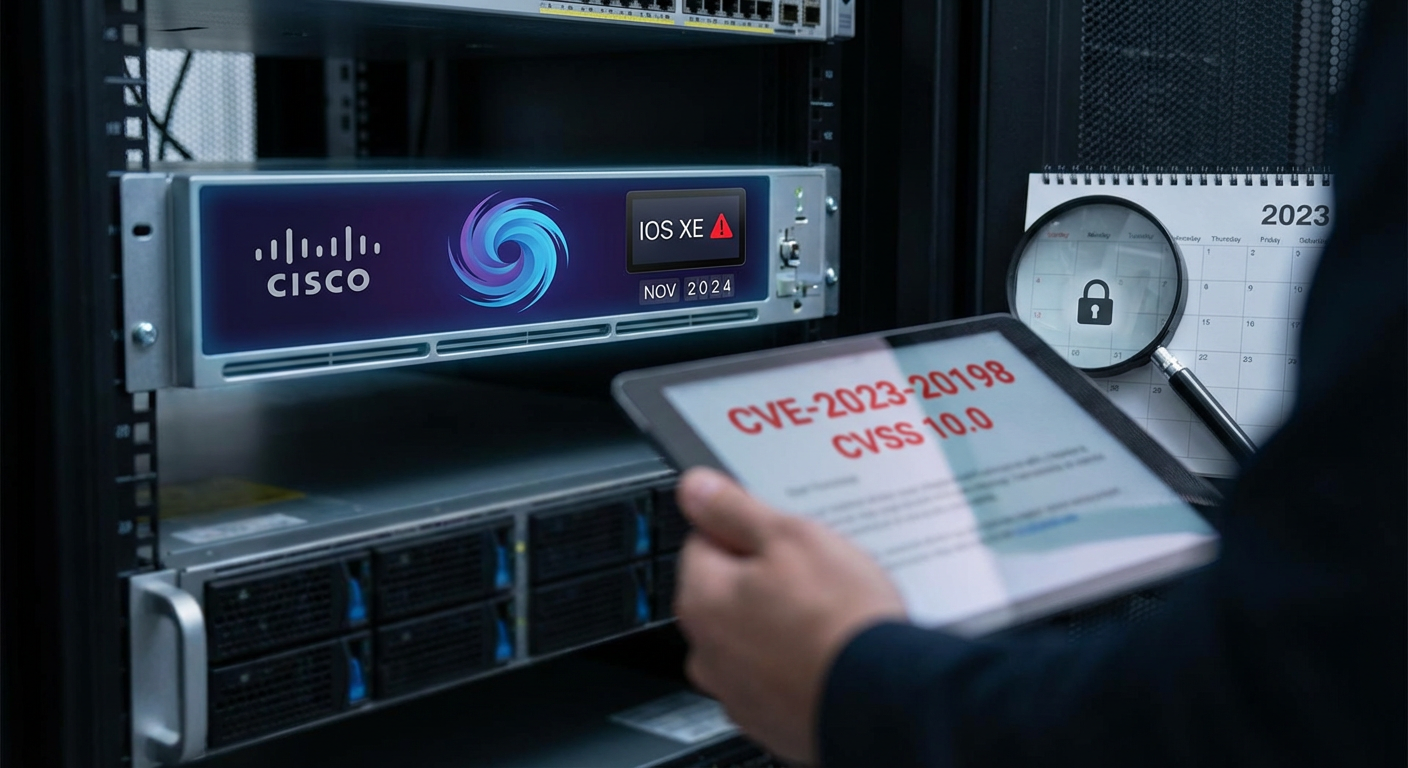
Cisco disclosed in November 2024 that attackers had exploited CVE-2023-20198 in IOS XE. Perfect CVSS score: 10.0, meaning literally as bad as it gets. The timing detail that should keep you up at night? A patch existed for over a year before anyone confirmed the exploitation. We’re talking about a window where the technical community knew exactly what was broken, exactly how to fix it, and yet those patches somehow never made it onto carrier-grade equipment managing the backbone of US telecommunications.
I want to be careful here about blame allocation. It’s easy to sit in 2025 and wonder why patches weren’t applied. The reality is far more interesting from an engineering perspective. Carrier networks aren’t like your SaaS infrastructure where you can push updates during your maintenance window. These systems move packets that route emergency calls, financial transactions, and yes, military communications. A failed patch doesn’t cost you a few users refreshing their browsers. It costs millions in revenue within minutes and potentially lives in the worst case. But that constraint cuts both ways: it’s precisely because the stakes are so high that security needs to be architected in, not bolted on. The fact that a patch sat available for over a year while the vulnerability remained exploitable tells me the patch evaluation and testing process was bottlenecked somewhere critical.
Enter the Mandate: How 2025’s FCC Rules Are Reshaping the Game
This is where things get genuinely interesting for engineers building systems that touch telecom infrastructure. The FCC, in a rare moment of regulatory decisiveness, issued new cybersecurity rules in January 2025 under Section 105 of the Communications Act. For the first time, carriers now face a binding mandate to submit annual cybersecurity risk management plans. This isn’t a suggestion. This isn’t a voluntary framework. This is a legal requirement with teeth.
What does this mean for you if you’re designing network management interfaces, monitoring systems, or anything that interfaces with carrier-grade infrastructure? Your threat model just got a lot more formal. The FCC cybersecurity rulemaking proceeding established specific documentation requirements around network segmentation, access controls, and incident detection capabilities. These requirements are going to cascade down to vendors. If you’re selling network management software to a carrier that needs to submit a credible risk management plan in 2026, that carrier’s procurement team is going to start asking very specific questions about your architecture. Can you prove network segmentation? Can you demonstrate that legacy protocols are properly isolated? Can you show that unpatched systems are actually unpatched systems and not critical infrastructure?
The 47-Million-Dollar Question: What Post-Breach Remediation Actually Costs
A February 2025 Mandiant report studied organizations in Salt Typhoon’s wake and found something sobering: 73% of affected organizations needed a complete re-architecture of their carrier-grade network management interfaces. The average remediation cost per carrier? 47 million dollars. Let that sink in. Forty-seven million dollars per organization. That’s not including legal settlements, regulatory fines, or the institutional knowledge lost to teams that became hyperfocused on containment and recovery for months.
This number does something important. It transforms cybersecurity from an abstract threat into a concrete business problem with a price tag attached. When you’re in a design meeting debating whether to implement proper network segmentation, whether to retire a legacy SNMP implementation, whether to enforce stricter access controls on management interfaces, you can now point to a specific number. Not as a scare tactic, but as data. The cost of doing it right up front is always less than the cost of doing it wrong and paying for it later. Always.
What This Means For How You Should Build Tomorrow
If you’re designing systems that touch telecommunications infrastructure, the message from 2025 is clear: segmentation isn’t optional anymore, legacy protocols need explicit justification and encapsulation, and patching pipelines need to be treated as first-class infrastructure problems rather than operational overhead. The systems that survive the next wave of regulatory scrutiny won’t be the ones with the fanciest features. They’ll be the ones where security was woven into the architecture from day one, where assumptions were validated rather than inherited, and where the cost of complexity was weighed against the cost of vulnerability.
Salt Typhoon was a failure. Full stop. But failures have a peculiar value if you’re paying attention. They expose the gap between how we think systems work and how they actually work. They show us which assumptions were dangerous and which were sound. The teams currently rebuilding carrier networks at 47-million-dollar scale aren’t learning these lessons for theoretical reasons. They’re learning them because the cost of not learning is too high to ignore. Worth thinking about before your next architecture review.
What’s your read on this? If you’ve worked on carrier-adjacent systems or large-scale infrastructure, I’m curious whether the new regulatory pressure feels like a forcing function for genuine improvement or just bureaucratic overhead. Drop your thoughts in the comments or reach out if you want to dig deeper into any specific attack vector or remediation strategy.