The Govern Function Arrived With a Mandate Nobody Was Ready For
February 2024 feels like yesterday and five years ago simultaneously. That’s when NIST dropped Cybersecurity Framework 2.0, and with it, a sixth function that fundamentally shifted how we’re supposed to think about security architecture. If you’ve been through enough compliance cycles, you know the drill: frameworks arrive, consultants pivot their decks, security teams scramble, and then most organizations sort of half-implement whatever feels closest to their existing structure.

Except this time feels different. The Govern function isn’t a technical control you can bolt onto your infrastructure. It’s an organizational restructuring wrapped in risk language, designed to make cybersecurity everybody’s problem, starting with the boardroom. The function explicitly targets organizational accountability structures, documented risk tolerance statements, and the cascade of decision-making that determines whether your company ships a product with known vulnerabilities or holds the line.
Here’s the problem: engineering teams hate it because it requires them to articulate things they’ve never had to articulate before. Security leadership hates it because it exposes how much of what they do has been theater. And the C-suite hates it because accountability flows upward, not sideways.
The 31% Problem and What It Actually Means
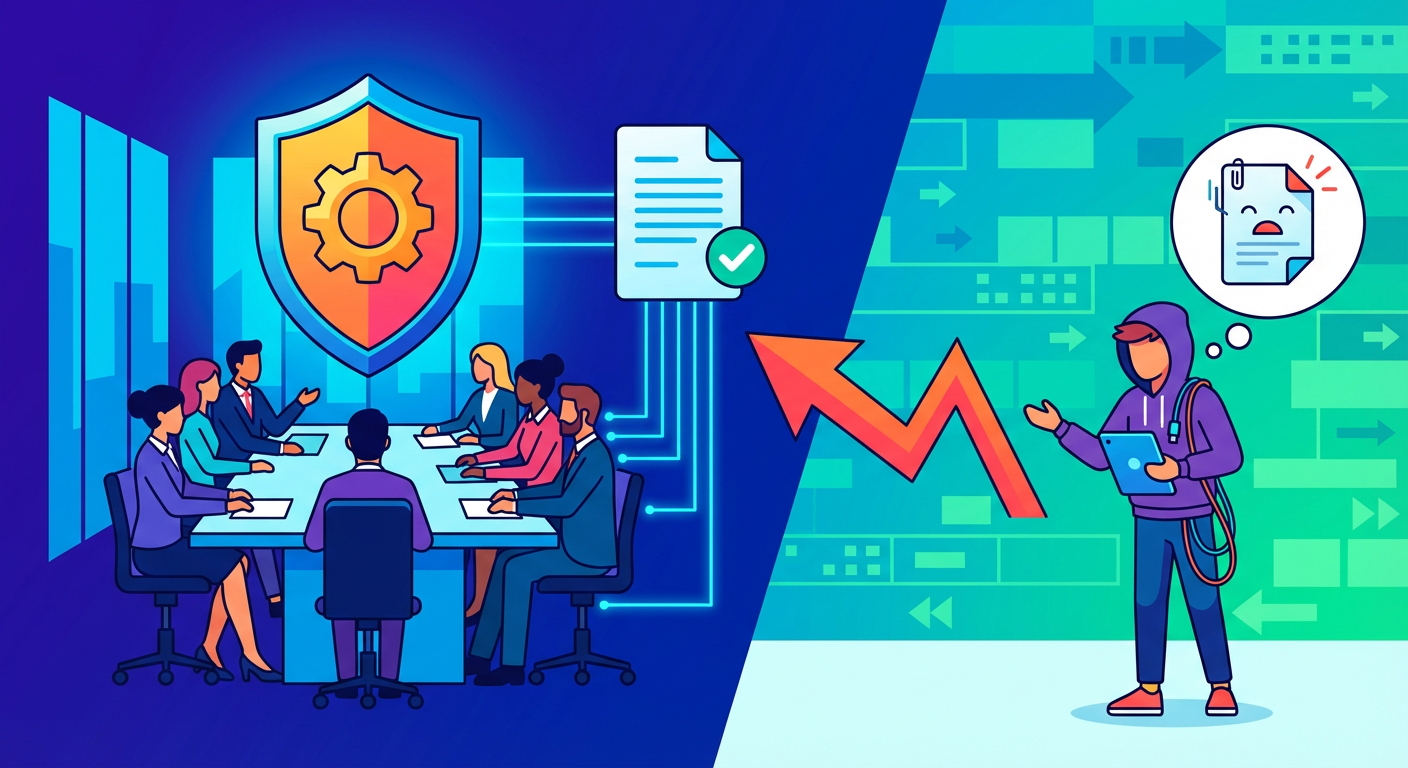
SANS released their 2025 survey results, and the headline was predictable enough: only 31% of organizations have fully mapped their security programs to the new Govern function. You could read that and think “okay, adoption lag, same as always.” But that’s not what’s actually happening.
The real story is that 69% of organizations either haven’t started mapping to Govern or have done it incompletely and know it. That’s not a gradual ramp-up problem. That’s a structural misalignment problem. Govern isn’t an add-on to your existing security program the way you might add a new detection layer or implement a new SIEM. It’s a prerequisite for the other five functions working coherently.
Think about this: if you don’t have documented organizational risk tolerance, how are you supposed to know whether your Identify and Protect functions are even calibrated correctly? You’re flying blind with extremely precise instruments. You know your threat landscape. You’ve mapped your assets. You’ve implemented controls. But you haven’t actually told anyone what level of risk the organization is willing to absorb. That’s Govern, and it’s the foundation everything else rests on.
The friction happens because Govern requires conversations that most engineering teams have never been forced to have with leadership. “What’s our risk appetite?” isn’t a technical question. It’s a business question that requires business leaders to make explicit choices, document them, and accept the consequences when incidents happen.
Supply Chain Risk Got Real, And the Framework Finally Caught Up
SolarWinds. XZ Utils. MOVEit. Log4Shell in countless supply chains. The original CSF from 2014 treated supply chain risk like it was someone else’s problem. It existed in the periphery, mentioned in passing, never integrated into the core decision-making structure. That gap cost companies billions.
CSF 2.0 didn’t just add supply chain considerations. It created a dedicated subcategory under Govern specifically for supply chain risk management. GV.SC lives at the governance level, which means your supply chain risk strategy has to flow from your organizational risk tolerance statement, not emerge from a security working group’s wishful thinking.
This matters because supply chain attacks don’t respect the perimeter. They don’t care about your firewall rules or your IDS signatures. They arrive through trusted relationships, wrapped in legitimacy, often with code signing certificates and everything that makes them look internal. If your governance structure doesn’t explicitly account for supply chain risk and doesn’t make it a board-level concern, you’re operating with incomplete threat modeling.
By moving supply chain risk into Govern, NIST forced organizations to make supply chain decisions at the same level where they make strategic business decisions. That’s not paranoia. That’s recognizing that your supply chain is your perimeter.
Why the Human Element Keeps Winning
Verizon’s 2025 Data Breach Investigations Report landed with its annual gravity, and one number should be hammering on your brain: 68% of breaches involved a human element. Not 40%. Not 55%. Sixty-eight percent. That’s not a security problem. That’s a governance problem.
You can’t engineer your way out of a problem that’s fundamentally about how humans make decisions under pressure, uncertainty, and competing incentives. A developer shipping code faster than is wise. An operations person clicking a link because they trust the sender. A procurement team approving a vendor without proper scrutiny because the business deadline won’t bend.
The Govern function, when implemented correctly, creates the structural conditions where these decisions get made differently. Not because people become more virtuous, but because the decision-making framework itself has changed. You’ve documented your risk tolerance. You’ve made supply chain risk a governance concern. You’ve connected cybersecurity accountability to business outcomes. Now when someone asks “can we cut corners on this implementation?” the answer has to flow through a documented framework instead of being negotiated in the hallway.
That doesn’t eliminate human error. But it shifts the probability distribution in your favor.
The Signal vs The Noise: What’s Actually Worth Your Attention Right Now
If you’re an engineering leader reading this in 2025, here’s the signal worth extracting: that 31% adoption rate for Govern isn’t staying at 31%. Regulatory bodies are starting to reference CSF 2.0 explicitly. Insurance underwriters are asking about it. Customers with government contracts are making it a compliance requirement. Adoption will accelerate.
But the acceleration will be ugly because most organizations will try to Govern-wash their existing programs. They’ll create a risk tolerance statement that says “we tolerate all risks we haven’t discovered yet” and call it done. They’ll map their supply chain inventory to GV.SC and think the work is finished. They’ll miss the entire point, which is that Govern is supposed to change how your organization makes decisions, not create another checkbox on a compliance spreadsheet.
The organizations that will have genuine security advantages in 2026 and beyond aren’t the ones that adopt CSF 2.0 fastest. They’re the ones that use the Govern function as an opportunity to restructure how their security and business decision-making interact. The ones that use documented risk tolerance as a forcing function for real conversations between engineering, security, and executive leadership. The ones that treat supply chain risk as a core input to business strategy rather than an addendum to the security program.
If your organization is still in the 69%, now is the moment. Not because compliance demands it, but because your actual vulnerability surface depends on getting this right. Start with the documentation. Make it specific. Make it real. Make it the foundation of how decisions flow through your organization.
For more detail on what Govern actually entails and how it integrates with the other five functions, the NIST Cybersecurity Framework 2.0 official documentation is surprisingly readable. And if you want to understand what the human element actually looks like in real breaches, the Verizon 2025 Data Breach Investigations Report is mandatory reading for anyone making security architecture decisions.
What’s your organization’s Govern implementation status? Are you in the 31% or still building the framework? Curious what specific friction points you’re hitting with leadership on risk tolerance documentation. Drop a note in the comments.